
 Verified Pro
96%
Verified Pro
96%
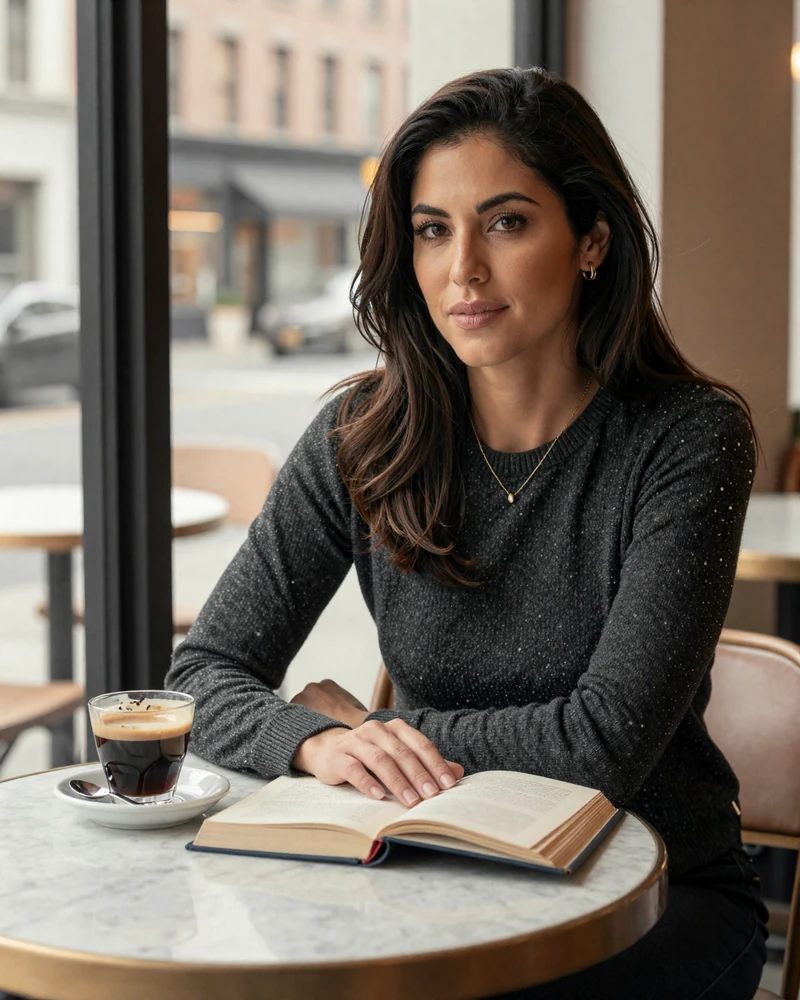
Dr. Eleanor, 36
Active 12 minutes ago
“General neurology attending, academic appointment. Read more than I watch. Looking for a man with his own intellectual life and the patience for a real one.”
Neurology · The thinking specialty
A neurologist dating site for men who’d rather have one long conversation than ten short ones. On MedMatch you’ll meet verified women neurologists whose work is built on patience, pattern recognition, and reasoning that holds up under pressure — and who want a partner with his own intellect, his own life, and the maturity not to mistake her independence for distance.
Identity & medical license verified · Profiles hand-reviewed · Serious intent only
Editor’s pick
Three women from this week’s neurology cohort. Every profile hand-reviewed, every medical license verified, every intent stated plainly. Neurologists tend to write profiles the way they write notes: clean, specific, and free of marketing language — which is exactly why men in their late thirties and forties find them refreshing.
Verified Pro
96%
Active 12 minutes ago
“General neurology attending, academic appointment. Read more than I watch. Looking for a man with his own intellectual life and the patience for a real one.”
 Verified Pro
94%
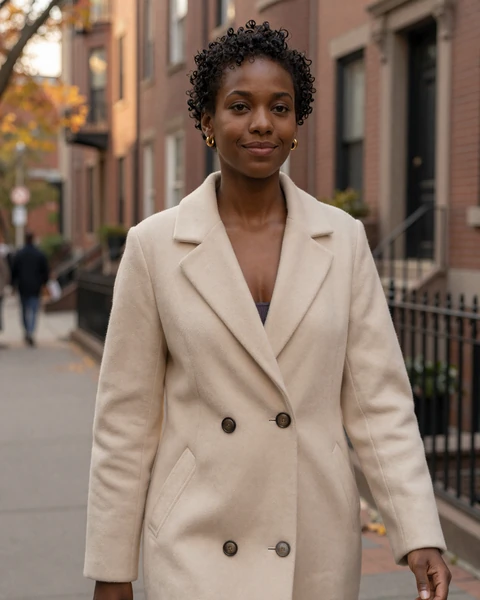
Verified Pro
94%
Active 42 minutes ago
“Stroke fellowship-trained, fast-paced clinical work. Slow weekends, long walks, longer reads. Done with men who want a fan, not a partner.”
 Verified Pro
92%
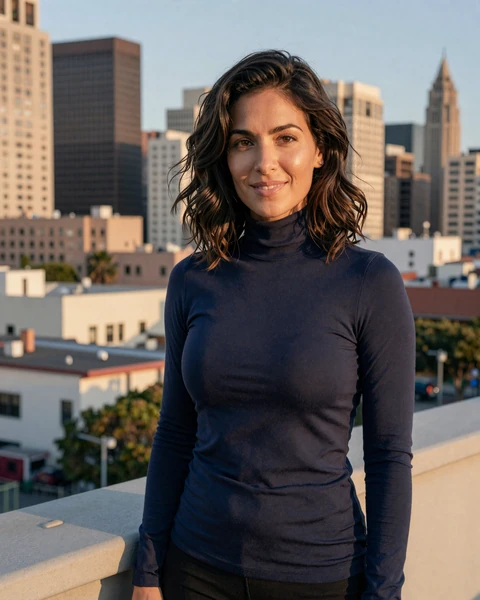
Verified Pro
92%
Active 3 hours ago
“Movement disorders, twelve years out. I want a partner who reads, travels, and doesn’t need me to manage his calendar. Direct messages, please.”
A specialty of patience
A neurologist is the physician who reasons her way through the most complex organ in the body. Where many specialties center on a procedure or a single system, neurology centers on the careful interpretation of a history, a thirty-minute exam, and patterns most people can’t see. Stroke, multiple sclerosis, epilepsy, Parkinson’s, migraine, dementia, neuromuscular disease — her differential might span a hundred conditions before the imaging comes back.
The path to attending neurologist runs about twelve years: four years of undergraduate, four years of medical school, a preliminary year of internal medicine, and three years of neurology residency, with optional fellowships in stroke, epilepsy, movement disorders, neuromuscular, headache, neurocritical care, or behavioral neurology. By the time she signs her first attending note she has examined thousands of patients and built a clinical instinct that’s closer to philosophy than to a checklist.
Among the recognized physician specialties — anesthesiologists, family doctors, internists, pediatricians, OB/GYNs, psychiatrists, surgeons — neurology is the one most defined by careful, sustained thinking. For men considering a neurologist dating site, the practical translation is straightforward: she will not be impressed by surface, and she will be impressed by a partner who can hold an idea for longer than a text thread.
A neurologist at a glance
Neurology is the specialty where the answer almost never arrives in the first sentence — and where the doctor learns to be comfortable with that. — MedMatch editorial team, 2026
After the clinic closes
The same training that makes a neurologist excellent at her job also shapes how she shows up at the end of it. Medical education rewards objectivity, structured reasoning, and emotional distance from the problem on the table. Carry that home unconsciously, and a partner can feel managed rather than met — analyzed rather than heard. The neurologists who build the best relationships are the ones who’ve learned to consciously turn off “clinician mode” at the door. The partners who thrive with them are the ones who’ve learned to recognize the difference.
Years of medical training condition the reflex to fix the problem, not to sit with it. When you bring her something difficult, her first instinct may be to diagnose it — not because she doesn’t care, but because that is what she has been rewarded for since her first rotation. The simplest correction is verbal: “I’m not looking for a solution, I just need you to hear this one.” She will respect the directness and recalibrate immediately. The men who get this right stop interpreting analysis as coldness and start treating it as a language she can switch out of when asked.
Medicine trains physicians to stay composed in moments where most people would not. That composure protects patients, but it can also blunt her own access to softer emotion in private. Expect that vulnerability with her will come in small windows, not big confessions — a quiet sentence in the car, a longer-than-usual silence on a Sunday morning. The right response is almost never a follow-up question. It is a hand on her back and a willingness to let the moment be exactly what it is.
What this means for you. The reward for a partner who can read these signals is real: a woman whose loyalty, once given, is durable. For the broader pattern across high-intensity specialties, see why successful doctors struggle with dating.
The compatibility case
A widely cited finding in social psychology offers the cleanest explanation for why brilliant women are statistically harder to match. In abstract surveys, men rate the idea of a smarter woman as more attractive. In real life, when she becomes specific — with a title, a salary, and an opinion in the room — the rating drops. The pull of the older “alpha-provider” script reasserts itself. For women neurologists, the dating gap created by that script is structural, not personal.
MedMatch exists because that gap doesn’t need to apply to you. The men who do best with neurologists on this platform share three traits: they are secure in their own work, genuinely curious about hers, and uninterested in scoreboards. None of that requires a comparable income or a comparable degree. It requires confidence and a real inner life — the kind that doesn’t depend on being the smartest person at the table to feel like a man.
| What she values | What it looks like in practice |
|---|---|
| Intellectual life of his own | A book on the nightstand, a real opinion on something outside his job, a podcast queue that isn’t all sports. |
| Comfort with her independence | No insecurity when she travels for a conference, when she earns more, or when she’s the visible one at a dinner. |
| Direct communication | States what he wants, asks clear questions, doesn’t play games over text response times. |
| Stable emotional baseline | Doesn’t escalate small disagreements, doesn’t need constant reassurance, knows how to take a day off the conversation. |
For the broader context on this dynamic, our editorial team has written a longer piece on what men should know before dating a female doctor. Read it before your first conversation, not after.
Verified neurologists active this week
Practical, not generic
Five insights drawn from member surveys, success-story interviews, and what the editorial team consistently sees work with women in neurology. Skip the manufactured wit, lead with substance.
A neurologist reads patient histories all day for the one detail that matters. Treat your opener the same way. Reference a specific line from her profile, share one genuine thought, and close. The four-sentence message that mentions a book she listed and proposes a Thursday wine bar converts at roughly four times the rate of the long, performative one. The men who write less, on this platform, get more.
Physicians spend their days suppressing emotion to function, and a real partner is one of the few people they can finally let that down with. Be a safe space for vulnerability, but don’t force it. Some evenings she will want to talk through the case that broke her heart. Other evenings she will want a kitchen, a glass of wine, and the sound of someone else cooking. Both are intimacy. Reading which is which is the skill.
Members of nurse and physician dating communities consistently report the same dilbreaker: a partner who can’t handle a twelve-hour silence. If she’s in a clinic block or rounding on the stroke service, she may not answer for half a day. The right response is no response — not a follow-up, not a check-in, not a passive-aggressive emoji. Independence and patience are valued above almost every other trait. Demonstrate both early and you’ll move to the front of her thread queue.
Neurologists are not used to being asked thoughtful questions about their work that aren’t requests for a free consult. One real question — “what got you into movement disorders specifically?” — followed by genuine listening, no interruption, no immediate pivot to your own story, will register more than any restaurant choice. Curiosity is a form of respect, and she has been short on it.
What she’s looking for, in the language of the experts she follows: a partner who has his own life, is emotionally stable, and doesn’t need her to be his entire social calendar. A friend group, a discipline, a sport, a real Saturday morning ritual that isn’t centered on her. The men who get the second date here are the ones who don’t arrive empty-handed in that sense. For a related specialty with a similar register, see our psychiatrist dating site.
A real match

I was tired of being told my job was “intimidating” by men who couldn’t hold a five-minute conversation about anything outside their work. Daniel’s first message on MedMatch asked me about a paper I’d cited in my profile and offered a counter-opinion. We argued about it on our first date and went on a second the next week. Eleven months in. He’s the first man I’ve dated who treats my mind like the best part of me.
Frequently Asked
You get a date with a neurologist by treating her like an intelligent adult with limited time. Write a short, specific first message that references something concrete from her profile. Propose a single date with a time, place, and neighborhood. Don’t over-text in between. On MedMatch, that approach converts to a first meeting roughly four times more often than the long, performative opener, because it respects her schedule and her judgment.
Neurologists most commonly partner with other physicians, attorneys, academics, founders, and senior professionals in finance or technology — partners with their own demanding intellectual work and stable identity. The shared trait is not income but interiority: a partner who has his own inner life, his own friends, and doesn’t need her career to be smaller for him to feel like the lead.
A general outpatient neurologist typically works four to five clinic days with patient blocks of 20 to 60 minutes, plus inbox time and rotating hospital coverage. Stroke and neurocritical care neurologists work shift-based schedules with overnight call. Movement disorders, headache, and neuromuscular subspecialists tend to have the most predictable weeks. Plan dates with that texture in mind — weekday evenings and Sunday afternoons usually beat Friday or Saturday nights.
Yes, in three specific ways. First, every member is identity-verified and medical license-verified before her profile goes live. Second, the population is pre-filtered for intent — over 80% state marriage or long-term commitment as their goal. Third, the men on the platform have self-selected for seriousness, which collapses the “is this person actually looking for something real” question that mainstream apps cannot answer.
Privacy is the most common concern from both sides. MedMatch lets every member set discovery filters so colleagues, residents from her program, or attendings she works with can be excluded from her feed. Profiles are only visible to members who match her filters in return. No profile is ever indexed by Google or shown publicly.